Kern County Criminal Court handles all criminal charges filed within Kern County and oversees both felony court and misdemeanor court proceedings under California law. It operates as part of the Superior Court of California, County of Kern and manages each stage of the criminal justice system, from arraignment to sentencing. The court reviews criminal charges filed by the prosecution against a defendant and schedules every court hearing based on state procedure. Judges apply the California Penal Code and protect constitutional rights during criminal proceedings. Each case follows a structured process that includes arraignment, pretrial motions, trial, and sentencing. Court clerks maintain records and manage official filings.
Kern County Criminal Court serves defendants, families, attorneys, and public record seekers who need reliable case information. Misdemeanor court addresses less serious offenses such as petty theft or minor assault, where penalties often include fines, probation, or short jail terms. Felony court handles serious crimes like robbery or major drug offenses and may result in state prison sentences. Some felony cases require a preliminary hearing before trial. Throughout the process, the prosecution presents evidence, and the defendant has the right to legal representation. Each court hearing plays a key role in maintaining fairness and order within the local criminal justice system.
What Is Kern County Criminal Court Responsible For?
Kern County criminal court jurisdiction covers the prosecution and trial of state criminal offenses committed within county boundaries. The court manages criminal case processing from the first filing of charges through final judgment within the California trial court system. The kern county criminal court jurisdiction falls under the Superior Court of California, County of Kern. This criminal law division handles violations of the California Penal Code and related statutes. It oversees legal proceedings in Kern County Court for adults charged with misdemeanors and felonies. Each case enters the criminal court division after law enforcement submits reports and the District Attorney files formal charges. Court staff then assign a case number and place the matter on the official court docket. From that point forward, the case follows a structured path through hearings and potential trial.
Types of Criminal Cases Handled
The criminal court division processes a wide range of offenses under state law. These cases vary in seriousness and potential penalties. The court hears domestic violence cases and certain weapons charges. It reviews repeat offender matters that may increase sentencing exposure. The court may handle warrant recalls and bail review hearings. Each case type appears on the criminal case calendar based on urgency and statutory deadlines. The court docket reflects scheduled appearances, motion hearings, and trial dates.
- Misdemeanor offenses such as DUI, petty theft, simple assault, and vandalism
- Felony offenses including robbery, serious drug crimes, burglary, and violent crimes
- Probation violations and post-conviction review hearings
Pre-Trial and Trial Proceedings
Criminal case processing begins with an arraignment, where the defendant enters a plea. The judge informs the defendant of constitutional rights and future court dates. The case then moves into pre-trial stages within the trial court system. During these stages, both prosecution and defense exchange evidence. The judge rules on legal disputes and sets deadlines. If no plea agreement occurs, the matter proceeds to trial. A jury or judge evaluates evidence and testimony before issuing a verdict. Trial proceedings follow strict courtroom procedure and evidentiary rules.
Pre-trial hearings may include:
- Bail review or modification
- Motions to suppress evidence
- Settlement conferences
- Preliminary hearings in felony matters
Role of Judges and Magistrates
Judges within the criminal court division oversee courtroom order and apply state law. They rule on motions, manage the criminal case calendar, and protect the rights of the defendant. Magistrates often handle early appearances, including arraignments and warrant reviews. Judicial officers decide bail conditions and determine whether felony cases move past the preliminary stage. They issue sentencing decisions after conviction. Their role supports fairness and consistency across legal proceedings in Kern County. Each decision becomes part of the official court docket and public record, subject to lawful limitations.
How Criminal Cases Move Through the System
Each step builds on the prior one within the kern county criminal court jurisdiction. Court clerks update records at every stage. This structured process helps maintain order and transparency inside the criminal law division and across the broader trial court system. A criminal case typically follows this path:
- Arrest or citation by law enforcement
- Filing of charges by the District Attorney
- Arraignment before a judge
- Pre-trial hearings and evidence review
- Trial or plea agreement
- Sentencing and post-conviction supervision
How to Search Kern County Criminal Court Records
Kern County criminal court records are maintained by the Superior Court of California, County of Kern, and most public criminal case information can be found through the official kern county criminal case search portal. This guide shows every step a person needs to find criminal case information, whether online or in person, and explains what information is required and how fees work. The official system includes a searchable criminal case calendar and court docket details for cases filed within Kern County. Not all records are public; some remain confidential under California law. Users should follow the instructions below to locate the information they need accurately and efficiently.
Online Case Lookup
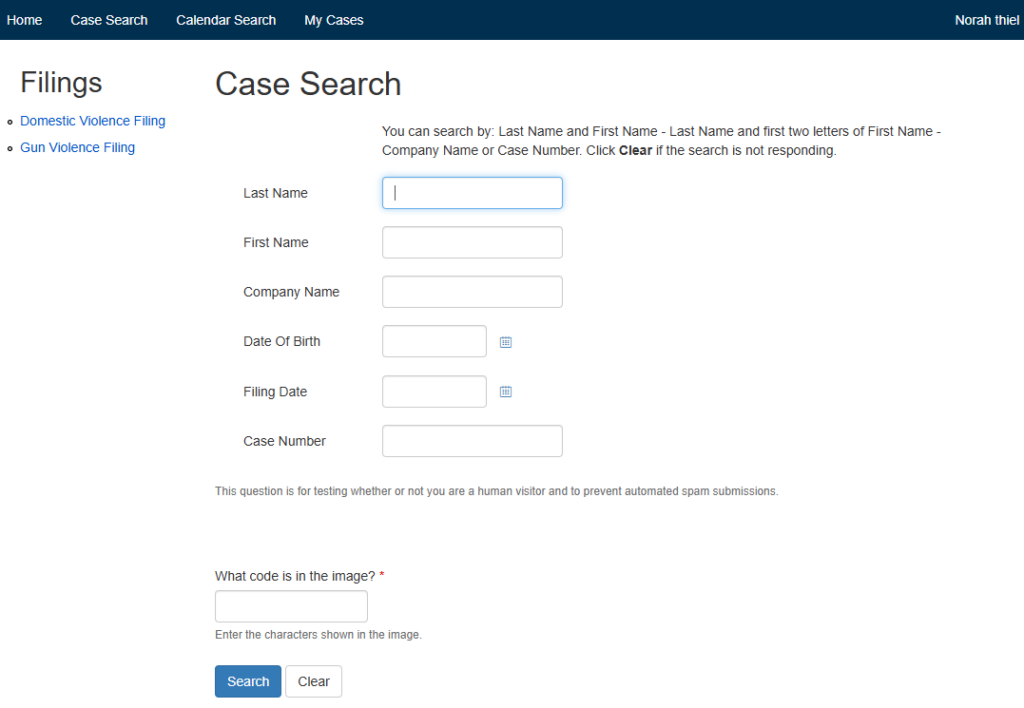
This section tells users exactly how to perform a kern county criminal case search from start to finish.
Open the Official Portal
- In your web browser, go to Official URL: https://www.kern.courts.ca.gov/online-services/case-information-search
- Wait for the page to fully load. It displays links for case search tools.
Choose the Correct Search Tool
On the page you will see different search options. For criminal matters:
- Select Criminal Case Search or Case Information
- Some pages may list separate tools for civil, family, traffic, and criminal; be sure to click the criminal option.
Enter Required Information
The criminal search tool lets you enter:
- Case Number (best and most accurate method)
- Defendant Name (first and last)
- Date of Birth (DOB) – optional but helpful if name is common
Review Search Results
The results screen will usually show:
- Defendant’s name
- Case number
- Charges filed
- Filing date
- Court hearing dates
- Case status (open, closed, pending)
- Department/department judge name
View Case Details
Click the case number link to view the docket. The docket may show:
- Motion hearings
- Trial dates
- Disposition entries
- Sentencing dates
What Information You Need to Search
If you only know a partial name, the tool will show a list of matches. You can then narrow results by adding a DOB or filing year. Avoid entering nicknames or initials; the system matches exact or close spellings. To get accurate results:
- Case number – Primary and fastest search method
- Full legal name – Use the exact spelling
- Date of birth – Helps avoid duplicate name matches
Public vs. Confidential Records
Court staff will not release confidential material without qualifying legal authority. Some kern county criminal court records are publicly accessible, while others are protected:
Public Records Include:
- Charges filed
- Court hearing dates
- Case status
- Sentencing results
Confidential or Restricted Records May Include:
- Juvenile matters
- Expunged/ sealed convictions
- Sensitive victim details
- Certain diversion program records
Kern County Felony Court Process
Kern County felony court handles serious criminal offenses that may result in long-term penalties, including state prison sentences. These cases move through a structured court process that protects the rights of the defendant while allowing the prosecution to present evidence. The kern county felony court operates within the Superior Court of California, County of Kern. Felony charges involve crimes such as robbery, aggravated assault, major drug offenses, and certain repeat DUI cases. These matters carry heavier penalties than misdemeanors and often require multiple court hearings. Each step in the felony court process follows California law and formal courtroom procedure. Below is a clear step-by-step breakdown of how felony cases move through the system.
Arrest and Booking
The jail may hold the accused person until a court appearance. In some cases, law enforcement presents evidence to a grand jury before filing formal charges. Booking records become part of the official criminal case file. This early stage sets the foundation for all later legal proceedings in Kern County. The process begins when law enforcement arrests a person based on probable cause. Officers transport the suspect to a local jail facility for booking.
During booking:
- Officers record personal information.
- Fingerprints and photographs are taken.
- The alleged felony charges are documented.
Arraignment
Arraignment is the first formal court appearance in kern county felony court. The judge informs the defendant of the felony charges filed by the prosecution. If the defendant cannot afford a private attorney, the court appoints a public defender. The court also confirms whether bail applies or if custody continues. This hearing officially moves the case into the felony court calendar.
At arraignment:
- The defendant enters a plea (guilty, not guilty, or no contest).
- The court advises the defendant of constitutional rights.
- The judge schedules future hearings.
Bail Hearing
A bail hearing may occur during or shortly after arraignment. The judge reviews factors such as public safety and flight risk. The judge may set bail, deny bail, or release the defendant under supervised conditions. Conditions may include travel limits or regular check-ins. Bail decisions can strongly affect how the defendant prepares for trial. Defense attorneys may request bail reduction based on mitigating factors.
The court considers:
- The seriousness of the alleged offense.
- The defendant’s prior criminal history.
- Community ties and employment status.
Preliminary Hearing
The preliminary hearing is a key stage in felony proceedings. Here, the prosecution must show enough evidence to support the felony charges. If sufficient evidence supports the charges, the case proceeds to trial. If not, the court may dismiss or reduce charges. In limited situations, prosecutors may use a grand jury indictment instead of a preliminary hearing. This step filters weak cases before trial and confirms that serious criminal offenses meet legal standards.
During this hearing:
- Witnesses may testify.
- The defense may cross-examine witnesses.
- The judge decides if probable cause exists.
Trial
If no plea agreement resolves the case, it proceeds to trial. The defendant may choose a jury trial or a bench trial before a judge. Both sides follow strict evidentiary rules. The burden rests on the prosecution to prove guilt beyond a reasonable doubt. Trials can last days or weeks depending on case complexity. The outcome determines whether sentencing will follow.
At trial:
- The prosecution presents evidence and witness testimony.
- The defense challenges evidence and may call witnesses.
- The jury or judge issues a verdict.
Sentencing
If the defendant pleads guilty or is convicted at trial, sentencing occurs in kern county felony court. The judge determines the appropriate penalty under California law. The probation department often prepares a pre-sentence report. This report reviews criminal history and recommends penalties. Judges weigh aggravating and mitigating factors before issuing a prison sentence or probation terms. After sentencing, the defendant may have the right to file an appeal.
Sentencing may include:
- State prison time
- Formal probation
- Fines and restitution
- Mandatory programs or counseling
Misdemeanor Cases in Kern County
Misdemeanor cases Kern County involve minor criminal offenses that carry lighter penalties than felonies but still require a formal court process. These cases move through the criminal division of the Superior Court of California, County of Kern and may result in fines, probation terms, or a short county jail sentence. Misdemeanor charges often begin with a citation issued by law enforcement or a brief arrest followed by release. Even though these are considered less serious than felony charges, they remain part of the defendant’s criminal record. The court treats each case seriously and schedules hearings according to the criminal case calendar. Many defendants resolve their case within a few court appearances, though some require trial.
Timeline From Citation to Court Date
Most misdemeanor cases start with a citation that lists the initial court appearance date. The citation acts as a written promise to appear. The court sends notices if additional hearings are scheduled. Missing a court date can lead to a bench warrant. A failure to appear may result in extra fines or custody. The court may add new charges tied to non-compliance. The timeline usually follows these steps:
- Citation or arrest
- Arraignment (initial court appearance)
- Pretrial hearings
- Resolution by plea or trial
Fine vs. Jail Sentence
Penalties depend on the nature of the offense and the defendant’s record. Judges often weigh criminal history and case facts before deciding punishment. Many first-time offenders avoid jail if they follow court orders. Payment plans may be available for fines. Some cases combine short jail time with probation terms.
Possible outcomes include:
- Monetary fines
- Community service hours
- Informal probation terms
- County jail sentence (up to one year)
First-Time Offender and Diversion Programs
Kern County offers alternatives for eligible defendants. These programs aim to reduce repeat offenses and promote accountability. Successful completion may lead to dismissal of charges in certain cases. Participants must follow strict program rules and attend all required sessions. Failure to comply can return the case to active prosecution. Misdemeanor cases Kern County follow a structured court process. Even minor criminal offenses require careful attention to court dates and probation terms to avoid additional penalties.
Options may include:
- Diversion programs for low-level offenses
- Drug or alcohol education programs
- Anger management classes
- Community service requirements
Arraignment Date in Kern County Criminal Court
Arraignment date Kern County refers to the first scheduled court appearance after criminal charges are filed. This initial court appearance allows the defendant to hear the charges and enter a plea before a judge. The arraignment takes place within the criminal division of the Superior Court of California, County of Kern. During this hearing, the court formally opens the case and places it on the official docket. Every defendant must attend unless the court grants a lawful exception.
What Happens at Arraignment
The defendant may plead guilty, not guilty, or no contest. If the defendant cannot afford an attorney, the court may approve a public defender appointment. The judge then sets future hearing dates. Arraignment hearings are often brief but legally significant. At the arraignment date Kern County criminal court, the judge:
- Reads the criminal charges
- Advises the defendant of constitutional rights
- Asks the defendant to enter a plea
- Reviews bail status
How to Check Arraignment Date
The online docket displays upcoming hearing dates and courtroom assignments. Accurate spelling improves search results. Defendants can verify their arraignment date using the official case lookup system: https://www.kern.courts.ca.gov/online-services/case-information-search
Steps to check:
- Visit the link above.
- Select criminal case search.
- Enter case number or full legal name.
- Review the scheduled court date listed in the case summary.
What to Bring to Arraignment
Arrive early and dress appropriately. Late arrival may result in rescheduling or custody action. Court staff call cases in order listed on the daily calendar. Defendants should prepare carefully for their initial court appearance.
Bring:
- Government-issued photo ID
- Court paperwork or citation
- Proof of bail payment, if applicable
- Contact information for your attorney
What If You Miss Arraignment?
A bench warrant authorizes law enforcement to arrest the defendant. The court may hold the defendant in custody until the next hearing. Anyone who misses court should contact the clerk’s office or an attorney immediately to resolve the matter. Missing the arraignment date Kern County court sets can trigger serious consequences. The arraignment date marks the formal start of criminal proceedings. Attending and responding properly helps protect legal rights and keeps the case moving forward in the criminal justice system.
The judge may:
- Issue a bench warrant
- Increase bail
- Add a failure to appear charge
Bail Hearing Process in Kern County
Bail hearing Kern County determines whether a defendant remains in custody or qualifies for pretrial release while a criminal case is pending. The court reviews custody status, applies the county bond schedule, and sets release conditions based on public safety and court appearance risk. The bail process takes place within the criminal division of the Superior Court of California, County of Kern. After arrest and booking, the defendant may remain in jail until the first court appearance. In many cases, bail is initially set according to a standard bond schedule. A judge later reviews the amount during a formal bail hearing. This step plays a major role in determining custody release terms.
Bail Hearing Timing and Bail Determination
A bail hearing often occurs at arraignment or shortly thereafter, particularly when a defendant remains in custody. The court reviews release conditions at the earliest available appearance, while defense counsel may seek a bail reduction and the prosecution may argue against release in serious cases. Judges typically begin with the Kern County bond schedule, which serves as a guideline rather than a mandatory rule. Bail decisions consider charge severity, flight risk, and public safety. If bail is granted, it may be posted through cash bail, a bail bond via a licensed agency (usually requiring a non-refundable fee), or a surety bond backed by property or assets.
Factors the Judge Considers
The court may grant own recognizance (OR release), which allows release without payment. OR release depends on low flight risk and limited criminal history. Judges may impose travel restrictions, protective orders, or reporting requirements as release conditions
The judge weighs multiple factors before granting pretrial release:
- Severity of the alleged offense
- Prior criminal record
- History of failure to appear
- Risk to community safety
- Employment and family ties
Bail Reduction Motion
A bail reduction motion asks the court to lower the bail amount. Defense attorneys present arguments about financial hardship, stable residence, and lack of prior violations. Clear documentation improves the chances of adjustment. The court reviews updated facts before issuing a decision.
The judge may:
- Reduce bail
- Leave bail unchanged
- Revoke bail if violations occur
No-Bail Cases
Some cases qualify as no-bail offenses under California law. These often include violent felonies or repeat serious crimes. A no-bail order can still be reviewed if circumstances change. Legal counsel may request reconsideration based on new evidence. The bail hearing Kern County process directly affects custody release and case preparation. Each decision balances the presumption of innocence with public safety concerns.
In no-bail cases:
- The defendant remains in custody
- The court may require a formal hearing before reconsideration
- Public safety concerns carry strong weight
Sentencing in Kern County Criminal Court
Sentencing Kern County criminal court marks the final stage after a conviction or guilty plea. The judge imposes criminal penalties based on state law, case facts, and recommendations presented at the sentencing hearing. Sentencing occurs within the criminal division of the Superior Court of California, County of Kern. Before the hearing, the probation department may prepare a report evaluating the defendant’s background and offense details. The report includes recommended penalties and supervision terms. Both prosecution and defense may file sentencing memoranda.
Sentencing Hearing Process
The judge announces the incarceration term, probation sentence, or other criminal penalties. A restitution order may require payment to victims. The court also sets fines and fees as required by law. Sentencing marks the formal conclusion of the criminal adjudication phase. The hearing ensures that statutory guidelines and judicial discretion are properly applied. Defendants, attorneys, and victims receive clarity regarding obligations and consequences.
- The judge reviews the probation report
- Attorneys present arguments
- Victims may give a victim impact statement
- The defendant may address the court
Aggravating vs. Mitigating Factors
Balancing these factors influences whether the sentence leans toward incarceration or supervision. Judges weigh aggravating and mitigating factors before deciding punishment. This evaluation promotes proportional sentencing aligned with the severity of the offense. Courts consider both the circumstances of the crime and the defendant’s background. The goal is to impose a sentence that reflects justice, deterrence, and rehabilitation.
Aggravating factors may include:
- Prior convictions
- Use of violence
- Significant harm to victims
Mitigating factors may include:
- No prior criminal record
- Acceptance of responsibility
- Cooperation with law enforcement
Appeal Rights
After sentencing Kern County criminal court proceedings conclude, the defendant may file a notice of appeal within the legal deadline. An appeal reviews legal errors rather than re-trying the case. The court clerk provides filing instructions upon request. Timely filing protects appellate rights. Once the sentence is imposed, compliance with court orders remains mandatory unless a higher court grants relief. Sentencing defines the legal consequences of a criminal conviction. Each order becomes part of the official court record and shapes the defendant’s future obligations under California law.
Role of the District Attorney Office
The Kern County District Attorney’s Office works closely with police agencies to determine whether evidence supports a criminal complaint. Prosecutors review reports, witness statements, and physical evidence before filing formal charges. The office carries the burden of proving guilt beyond a reasonable doubt in court. Each prosecutor acts on behalf of the public and presents cases in the criminal division of the Superior Court.
How Charges Are Filed
The charging decision depends on available proof and legal standards. If evidence is insufficient, the prosecutor may reject the case or request further investigation. Once charges are filed, the case receives a court number and appears on the criminal calendar. Prosecutors must disclose relevant evidence to the defense under California law. The charging process begins after law enforcement completes an investigation. Officers submit reports to the Kern County District Attorney Office for review.
Prosecutors then:
- Examine evidence and applicable criminal statutes
- Decide whether to file a criminal complaint
- Determine the level of charges, misdemeanor or felony
Role in Plea Bargains
Plea discussions often consider victim input and case strength. The prosecutor evaluates public safety concerns before making any offer. Judges must approve all plea agreements before they become final. This process helps manage court workload and may shorten the length of legal proceedings. The prosecutor plays a central role in negotiating plea agreements. A plea bargain allows the defendant to resolve charges without trial.
During negotiations, prosecutors may:
- Reduce certain charges
- Recommend lighter sentencing terms
- Agree to dismiss specific counts
Victim Services
Victim advocates explain court procedures and answer questions about the criminal process. They help victims prepare impact statements for sentencing hearings. The office works to protect victim rights under California’s constitutional provisions. The Kern County District Attorney Office provides support to crime victims through dedicated victim services units.
Services may include:
- Court accompaniment
- Notification of court dates
- Help with restitution claims
- Safety planning assistance
Working With Law Enforcement
Strong coordination improves case quality before trial. Prosecutors rely on accurate police reports and credible testimony to support criminal complaints. Clear communication between agencies supports fair and effective prosecution. Prosecutors collaborate closely with local and state law enforcement agencies. This partnership strengthens case preparation and evidence presentation.
The office may:
- Advise officers during investigations
- Review search warrant applications
- Prepare witnesses for court testimony
Location & Contact Information
Kern County criminal court location is based in downtown Bakersfield, where the main criminal courthouse handles felony and misdemeanor proceedings. Visitors should confirm courtroom assignments and hearing times before arrival to avoid delays. The primary criminal division operates at the courthouse managed by the Superior Court of California, County of Kern in Bakersfield.
Main Criminal Courthouse Address:
1415 Truxtun Avenue
Bakersfield, CA 93301
This courthouse address serves as the central location for most criminal hearings. Some departments may operate in nearby facilities, so checking the assigned courtroom in advance is recommended. The daily criminal case calendar lists courtroom assignments by department number.
Court Hours
Standard court hours typically follow weekday business schedules.
- Monday through Friday
- Morning sessions often begin around 8:00 AM
- Clerk windows may close earlier than courtroom sessions
Clerk Contact Details
For case questions or record requests, contact the criminal division clerk’s office. General information that you can search is available through the court’s main phone line listed on the official website: https://www.kern.courts.ca.gov
Clerks can help with:
- Case number verification
- Courtroom assignments
- Public access terminal use inside the courthouse
- Copy fee information
Frequently Asked Questions
This section answers common questions about criminal cases in Kern County. Each response explains what to expect during a court appearance and how different outcomes may affect a criminal record. The information below helps readers prepare for hearings and avoid serious legal consequences.
How do I find my criminal court date in Kern County?
You can find your criminal court date by using the online case search tool provided by the Superior Court of California, County of Kern. Enter your case number for the fastest result. If you do not have it, search by full legal name and date of birth. The system displays your next court appearance, courtroom assignment, and case status. You may also call the criminal clerk’s office for confirmation. Visiting the courthouse in person allows you to use a public access terminal. Always double-check the date before attending court to avoid a warrant issued for failure to appear.
What is the difference between a felony and a misdemeanor?
A felony involves more serious criminal conduct and carries heavier penalties than a misdemeanor. Felony convictions can result in a state prison sentence and long-term supervision. Misdemeanors usually involve minor criminal offenses and may lead to fines, probation, or a short county jail term. Felony cases often require a preliminary hearing before trial. Misdemeanor matters tend to resolve faster through plea agreements or brief hearings. Both charges create a criminal record if a conviction occurs. The classification depends on the facts of the case and how prosecutors file the charges in court.
How long does a criminal case usually take?
The length of a criminal case varies based on charge severity and court scheduling. A misdemeanor case may resolve within several weeks if the defendant enters a plea early. Felony cases often take several months due to preliminary hearings and trial preparation. Delays may occur if attorneys request additional time to review evidence. Cases that proceed to jury trial generally last longer than negotiated plea agreements. Court calendar availability can also affect timing. Each court appearance moves the case forward until resolution through dismissal, plea, or verdict.
Can criminal charges be dismissed?
Criminal charges may be dismissed if evidence is weak or procedural errors occur. A judge can dismiss a case after reviewing motions filed by the defense. Prosecutors may request dismissal if new evidence changes the charging decision. Completion of certain diversion programs may qualify a defendant for dismissal. Dismissal means the case closes without a conviction. Even after dismissal, court records may remain unless sealed under California law. The outcome depends on facts, legal arguments, and court rulings during scheduled hearings.
What happens if I miss my court date?
Missing a scheduled court appearance can lead to serious legal consequences. The judge may issue a bench warrant for arrest. A warrant issued allows law enforcement to take the defendant into custody at any time. The court may increase bail or add a separate failure to appear charge. Missing court can negatively impact probation terms and future release decisions. Anyone who misses a hearing should contact the clerk or an attorney immediately. Acting quickly may help resolve the issue before further penalties affect the criminal record.