Kern County Family Court serves as the county’s primary forum for resolving family law disputes. It functions within the Superior Court of California, County of Kern and forms part of the statewide California Superior Courts. This family law division manages cases involving divorce, legal separation, child custody, visitation, child support, spousal support, and domestic violence restraining orders. Judges apply California Family Code and local court rules to issue fair and enforceable decisions. The court also offers mediation services in many custody cases, helping parents reach workable agreements before a formal hearing takes place.
The family court in Kern County, often called the Kern County domestic relations court, hears cases filed by spouses, parents, guardians, and other parties with legal standing. Married couples file for dissolution of marriage, and unmarried parents file parentage actions to establish legal rights and responsibilities. The local family judiciary reviews financial disclosures, parenting plans, and evidence presented in hearings. Judges issue temporary orders early in a case and final judgments after resolving all disputes. Through structured procedures and court supervision, the family law division protects children’s best interests and promotes lawful resolution of family conflicts.
Kern County Family Court Case Search
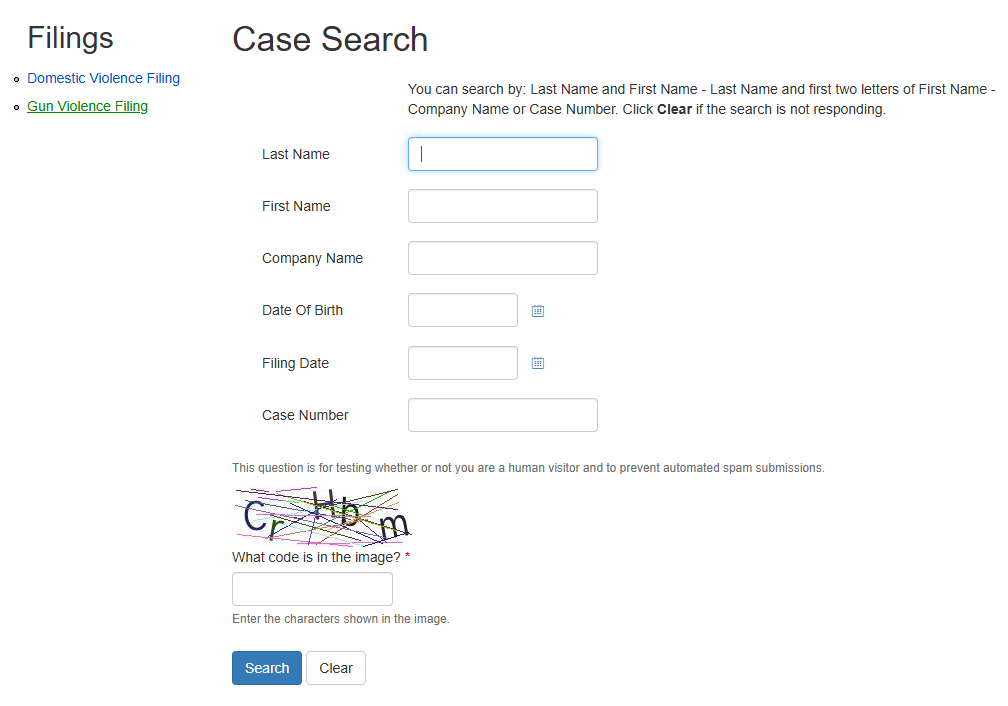
The kern county family court case search tool is managed by the Superior Court of California, kern County Court. It provides public access to basic family law case information. This includes divorce filings, custody disputes, child support cases, parentage actions, and domestic violence restraining orders. The online portal functions as a case lookup and docket search platform. It shows procedural history and scheduled court appearances, though it does not display confidential documents. Follow these complete steps to perform a successful online court records search:
Open the Official Website
- Type the URL directly into your browser: https://www.kern.courts.ca.gov
- Press Enter to load the homepage.
Locate the Case Search Section
- On the homepage, look for a menu labeled “Online Services” or “Case Information Search.”
- Click on the case search link.
- Select the option for Family Law Case Search if prompted.
Choose Your Search Method
You will typically see two main fields:
- Case Number Field
- Enter the full case number (example: FL-2024-000123).
- This method gives the most accurate result.
- Include letters exactly as shown on court documents.
- Party Name Field
- Enter the last name first.
- Add the first name if known.
- Avoid nicknames.
- Check spelling carefully.
Review Search Results
- Click the Search button.
- The system will display matching cases.
- Select the correct case from the list.
- Review available details such as:
- Filing date
- Case status
- Assigned courtroom
- Future hearing dates
- Docket entries
Understand Public Record Limits
The portal shows summary data only. It does not display:
- Financial disclosures
- Custody evaluation reports
- Sealed documents
- Confidential addresses
- Minor child information
What Information You Should Prepare Before Searching
Using a case number saves time and prevents confusion with similar names. To avoid errors, gather:
- Full case number (if available)
- Correct legal spelling of party names
- Approximate year of filing
- Type of case (divorce, custody, support, restraining order)
Family Law Matters Handled
The family law division operates within the Superior Court of California, County of Kern. Judges manage custody proceedings, support enforcement cases, divorce actions, and protective order requests. Each matter follows structured procedures that include filing petitions, serving papers, financial disclosures, mediation when required, and court hearings. The goal is to issue fair decisions that protect children and clarify legal rights between parties.
Divorce & Legal Separation
Divorce, legally called dissolution of marriage, is one of the most common family law matters. A spouse files a petition to end the marriage and requests orders related to property, custody, and support. In many cases, parties negotiate a marital settlement agreement. If both sides agree, the judge can approve the settlement without a full trial. If disputes remain, the court schedules hearings to resolve them.
The court addresses:
- Division of community property and debts
- Spousal support requests
- Child custody and visitation
- Child support calculations
Child Custody Proceedings
Custody proceedings focus on protecting the best interests of the child. The court examines safety, stability, and each parent’s involvement in daily life. Judges often require parents to attend mediation before a contested hearing. Parents may submit detailed parenting plans that outline responsibilities and a visitation schedule. If parents agree, the judge may adopt their plan as a court order.
There are two types of custody:
- Legal custody – the right to make decisions about education, health care, and welfare
- Physical custody – where the child lives
Child Support Orders
Child support orders require one parent to provide financial support for a child’s living expenses. California uses a statewide support calculation formula. The formula reviews income, time spent with the child, tax status, and health insurance costs. The court conducts an income review based on pay stubs, tax returns, and employer records. After review, the judge issues a monthly payment order. Parents may file a modification request if income changes or custody arrangements shift. Support enforcement cases may involve wage garnishment or other collection tools. The court takes compliance seriously and can impose penalties for failure to pay.
Spousal Support
Spousal support, commonly called alimony, provides financial assistance to a lower-earning spouse after separation. Judges may grant temporary support during the divorce process to maintain financial stability. Short-term marriages often result in limited support periods. Long-term marriages may involve extended support. The court reviews financial disclosures carefully before issuing orders.
Final alimony orders depend on factors such as:
- Length of marriage
- Standard of living during marriage
- Earning capacity of each spouse
- Age and health of both parties
Domestic Violence & Restraining Orders
Family court also handles cases involving abuse or threats. A party may request a protective order to stop harassment, violence, or stalking. Temporary restraining orders can be granted quickly if there is risk of harm. Final orders may last several years and can include custody restrictions, move-out orders, and firearm surrender requirements. The process usually includes:
- Filing a request for restraining order
- Temporary emergency order review
- Scheduling an emergency court hearing
- Issuance of a longer-term order if approved
Paternity & Parentage Cases
Parentage cases establish the legal relationship between a child and a parent. Either parent may file to establish parentage if the parents were not married when the child was born. The court may order genetic testing if paternity is disputed. Once parentage is confirmed, the judge can issue custody and child support orders. Establishing legal parentage gives a child rights to financial support, inheritance, and access to benefits. It also defines parental responsibilities under California law.
How to File a Family Case in Kern County
Family law cases are handled through the Superior Court of California, County of Kern. Whether the case involves divorce, custody, support, or parentage, the steps remain structured and consistent. Petition submission must meet legal requirements, and the clerk office reviews documents for compliance before assigning a case number. Below is a detailed breakdown of the process.
Steps for Filing Process
The filing procedure follows a clear order. Each step must be completed properly to avoid delays.
- Prepare Required Court Forms
Start by identifying the correct forms for your case type, such as divorce, custody, or support. California Judicial Council forms are mandatory in most family law matters. Forms must be completed fully and signed where required. Incomplete forms may be rejected by the clerk. Review all entries carefully before submission. - File Forms with the Clerk Office
Submit the completed paperwork to the Family Law Clerk’s Office in person or through approved electronic filing if available. The clerk stamps the documents and assigns a case number. This number identifies your case in all future court proceedings. Keep stamped copies for your records. - Pay the Filing Fee
Filing fees vary by case type. Divorce petitions typically require a higher initial filing fee than custody-only cases. Fee schedules are posted by the court and updated periodically. Payment can usually be made by cash, check, or card, depending on location. - Request a Fee Waiver
If a party cannot afford the filing fee, they may submit a fee waiver application. The court reviews income, expenses, and financial hardship claims. Approval allows the case to proceed without upfront payment. Supporting financial documentation may be required. - Receive a Case Number and Court Assignment
After filing, the court assigns a case number and may schedule an initial hearing date. Some cases require mediation before appearing before a judge. The court may issue initial procedural instructions at this stage.
Required Documentation
Each document must follow court formatting rules. Financial disclosures must reflect accurate income, assets, and liabilities. Failure to disclose fully can result in penalties or delays. Parties must update disclosures if financial conditions change during the case. Accurate documentation supports proper domestic case filings. Required materials may include:
- Completed petition and summons forms
- Financial disclosure forms
- Income and expense declaration
- Property and debt schedules
- Child custody information sheets
Service of Process
After petition submission, the filing party must complete service of process. Service ensures fairness and protects due process rights. If the responding party cannot be located, the court may allow alternative service methods with approval. This step legally notifies the other party about the case.
- The petitioner cannot personally serve the documents.
- A neutral adult, sheriff, or registered process server must deliver the papers.
- Proof of Service forms must be filed with the court.
What Happens After Filing
Once service is completed, the responding party has a limited time to file a response. If no response is filed, the petitioner may request a default judgment. If a response is submitted, the case moves forward through mediation, settlement discussions, or hearings. In custody proceedings, the court often schedules mediation before a contested hearing. In divorce matters, parties exchange financial disclosures before final orders are issued. Temporary orders for support or custody may be requested while the case remains pending.
Custody Proceedings in Kern County
Custody matters are handled through the family law division of the Superior Court of California, County of Kern. Judges review evidence, parenting plans, and mediation results before making decisions. The process applies to married and unmarried parents alike. Courts encourage cooperative parenting whenever possible, though judicial intervention becomes necessary when disagreements affect a child’s well-being. Each case follows California family law rules and focuses on long-term stability for the child.
How Custody Decisions Are Made
During custody proceedings, the court evaluates multiple factors before issuing orders. Judges examine each parent’s ability to provide care, maintain stability, and support the child’s development. The court reviews written declarations, testimony, and supporting documents. Judges may issue temporary custody orders early in the case to maintain consistency for the child. These temporary arrangements often remain in place until a final hearing occurs. Parents who present organized parenting plans and clear communication records often help the court reach decisions more efficiently.
Key decision elements include:
- Parenting time arrangements
- Each parent’s involvement in daily activities
- History of caregiving responsibilities
- Ability to support education and health needs
Best Interest of the Child Standard
California courts apply the best interest of the child standard in all custody proceedings. This legal principle places the child’s welfare above parental preferences. Judges aim to create arrangements that support healthy development and consistent routines. Courts favor solutions that allow frequent and continuing contact with both parents when safe and appropriate. School continuity, community ties, and emotional bonds often influence final decisions. The judge may request additional information if concerns arise regarding a child’s environment or supervision.
The court considers:
- Child safety and emotional health
- Stability of living arrangements
- Parent-child relationships
- Any history of abuse or neglect
Court-Ordered Mediation
A mediation requirement applies before most contested custody hearings. Parents must attend mediation sessions through court-connected services. A trained mediator works with both parents to reach agreement. If parents reach consensus, the mediator prepares a recommended parenting plan for judicial approval. If agreement fails, the mediator may submit recommendations to the judge depending on local procedures. Mediation sessions often focus on communication strategies, scheduling logistics, and conflict reduction to support workable long-term arrangements.
Mediation helps parents:
- Develop cooperative parenting time schedules
- Resolve disagreements outside the courtroom
- Reduce stress for children involved in disputes
Custody Evaluation and Modifying Custody
In some cases, the court orders a custody evaluation when disputes remain unresolved. Evaluators review family dynamics, interview parents and children, and analyze living conditions before submitting a report. Custody orders can later be changed through modification requests when circumstances shift. Common reasons include relocation, changes in work schedules, or concerns about a child’s safety.
To modify custody, a parent must:
- File a request for order
- Show a significant change in circumstances
- Present evidence supporting the proposed change
Support Orders & Modifications
Support orders in Kern County require one party to provide financial assistance for a child or former spouse. The court calculates payment amounts using state formulas and reviews modification requests when income or circumstances change. Support matters are handled through the family law division of the Superior Court of California, County of Kern. Judges issue child support and spousal support orders after reviewing financial disclosures, employment records, and statutory factors under California law. These orders carry legal force and remain active until modified or terminated by the court.
Child Support Calculation
Child support orders follow a statewide formula. California courts rely on a guideline calculator that applies uniform standards across counties. The court requires each parent to submit a current Income and Expense Declaration. Judges review pay stubs, tax returns, and other proof of earnings before issuing orders. If a parent is unemployed or underemployed, the court may assess earning capacity instead of actual wages. Accurate reporting prevents disputes and reduces delays during hearings. Support payments usually continue until the child turns 18 and graduates from high school, subject to legal conditions. Orders may include health insurance coverage and shared medical costs.
The calculation considers:
- Gross monthly income of both parents
- Percentage of parenting time
- Health insurance costs
- Tax filing status
- Mandatory deductions such as retirement or union dues
Spousal Support Determination
Spousal support, often called alimony, helps maintain financial balance after separation. Judges may award temporary support during a pending divorce case. Shorter marriages often result in shorter payment durations. Longer marriages may justify extended support. The court carefully reviews financial disclosures to confirm income, assets, and expenses before issuing a final decision.
When issuing long-term spousal support orders, the court reviews:
- Length of the marriage
- Standard of living during marriage
- Earning ability of each spouse
- Age and health of both parties
- Contributions to career development or education
Enforcement Actions
Support orders remain enforceable under California law. If a parent or former spouse fails to pay, the court can initiate enforcement measures. Income withholding is one of the most common methods. Employers deduct support payments directly from wages and send them to the state disbursement unit. Enforcement ensures timely payments and protects the financial needs of children and supported spouses.
Common enforcement tools include:
- Income withholding through wage garnishment
- Interception of tax refunds
- Suspension of driver’s or professional licenses
- Contempt proceedings in severe cases
How to Request Modification
Support orders can change if financial conditions shift. A parent or spouse must file a modification request with the court. Valid reasons for modification may include job loss, income increase, disability, or changes in parenting time. The court reviews current financial data using the same guideline calculator applied in the original order. Temporary orders may be adjusted during hearings. Final modifications take effect after judicial approval. Until the court signs a new order, the existing support order remains legally binding and enforceable.
Steps to modify support include:
- Filing a Request for Order
- Submitting updated financial disclosures
- Providing proof of income change
- Serving the other party properly
Court Hearings & What to Expect
Family court hearings follow a structured process where a judge reviews evidence, hears arguments, and issues orders. The family court hearing process in Kern County applies to custody, support, divorce, and restraining order matters. Hearings take place through the family law division of the Superior Court of California, County of Kern. Each party must follow court appearance rules and procedural timelines. Preparation improves clarity and helps the judge review facts efficiently.
Preparing for Court
Proper preparation strengthens a party’s position during a hearing. Courts expect organized and timely submissions. Parties should file and serve required paperwork before deadlines. Late submissions may not be reviewed. Arriving early allows time for security screening and check-in. Preparation reduces stress and improves courtroom presentation.
- Review all filed documents carefully.
- Confirm the hearing date, time, and courtroom assignment.
- Prepare a short outline of key points to present.
- Organize supporting documents in logical order.
What to Bring
Bringing the correct materials prevents delays during the hearing. Each document should be clearly labeled. Bring at least two copies: one for the judge and one for the opposing party. Organized evidence supports proper evidence submission and allows the court to review materials efficiently.
- Filed court forms and copies
- Proof of service documents
- Financial records if support is at issue
- Evidence such as messages, receipts, or reports
Dress Code
Court appearance rules require respectful attire. Judges expect professional conduct. Polite speech and calm behavior improve credibility. Address the judge as “Your Honor” and speak only when permitted.
- Wear clean, conservative clothing.
- Avoid shorts, flip-flops, or clothing with offensive text.
- Remove hats and silence electronic devices.
Timeline of Hearing
Some hearings last 15 minutes. Others may take longer if evidence is complex. Written orders usually follow the hearing. Parties must comply with orders immediately unless the court states otherwise. The timeline of a typical hearing follows a set order:
- Case is called by the clerk.
- Parties step forward and identify themselves.
- The judge reviews filings and hears arguments.
- Evidence is presented if needed.
- The judge announces a decision or takes the matter under submission.
Mediation & Alternative Dispute Resolution
Mediation and alternative dispute resolution offer structured methods to resolve disputes outside a full trial. Many family cases require court mediation before a contested hearing. The probate court may also encourage mediation in estate or guardianship disputes, while the family law division of the Superior Court of California, County of Kern often mandates mediation in custody proceedings. These programs aim to reduce conflict and promote workable agreements.
Mandatory Mediation
Custody disputes usually involve a mediation requirement before a judge hears the case. If agreement is reached, the mediator drafts terms for judicial approval. If not, the case proceeds to hearing. Mediation promotes structured communication and focuses on child welfare.
- Parents attend sessions with a trained mediator.
- The mediator helps identify areas of agreement.
- Parenting time and scheduling issues are discussed.
Benefits of Settlement
Settlement through mediation or a settlement conference offers advantages. Agreements reached voluntarily often lead to better compliance. Parents who cooperate in settlement often maintain healthier co-parenting relationships.
- Reduced court costs
- Faster resolution
- Greater privacy
- More control over final terms
Avoiding Trial
Trials require formal evidence presentation and longer court time. Avoiding trial saves resources and reduces emotional strain. Alternative dispute resolution supports efficient case management and reduces courtroom congestion. When parties reach agreement, the judge reviews and signs the final order, making it legally binding.
- Collaborative law allows parties and attorneys to resolve disputes cooperatively.
- Settlement conferences provide judicial guidance without a full trial.
- Written agreements can resolve financial and custody matters completely.
Fees, Costs & Fee Waivers
Family law cases in Kern County require payment of filing fees and related court costs at the time documents are submitted. These fees apply to divorce, custody, support, and other domestic filings handled by the family division. All payments are processed through the Superior Court of California, County of Kern. The court publishes a statewide fee schedule that applies to most California counties. Parties should always verify current amounts on the official court website before filing.
Typical Fees
Filing fees depend on the type of family law case and the action requested. Initial petitions usually cost more than later motions, and response fees apply to the opposing party. Below is a general estimate based on the current California statewide Superior Court fee structure (amounts may change):
| Filing Type | Approximate Fee (USD) |
|---|---|
| Petition for Dissolution of Marriage (Divorce) | $435 |
| Response to Divorce Petition | $435 |
| Petition to Establish Parentage | $435 |
| Request for Order (Custody/Support Motion) | $60 |
| First Appearance Fee (if required) | $435 |
| Certified Copy of Court Order | $40 + per-page cost |
| Copy of Filed Documents | $0.50 per page |
Common court costs include:
- Initial filing fees for divorce or parentage petitions
- Fees for responding to a petition
- Motion or Request for Order filing fees
- Certified copy charges
- Court reporter or transcript costs if requested
How to Apply for a Fee Waiver
The court allows parties with limited income to request a fee waiver application. Approval can remove most upfront filing fees and certain court costs. The judge reviews household income, public benefits status, and financial hardship. If approved, the waiver may cover filing fees, motion fees, and some certified copy costs. If denied, the court will set a deadline for payment.
To apply:
- Complete the Request to Waive Court Fees form (FW-001).
- Provide detailed income, expense, and asset information.
- Submit the form with your initial filing paperwork.
- Wait for judicial review and written approval.
Payment Methods
The clerk’s office offers several payment options for filing fees and court costs. Payment confirms official acceptance of your domestic case filing. Parties should keep receipts for their records. If filing in person, arrive early to allow time for processing. Once payment is accepted or a fee waiver is approved, the court assigns a case number and the matter moves forward in the family law system.
Accepted methods include:
- Cash payments at the courthouse
- Personal check or cashier’s check
- Credit or debit card (if available at location)
- Online payment through the official court portal
Location & Contact Information
The kern county family court location is based in Bakersfield, where the county’s main Superior Court handles family law matters. Parties must file documents, attend hearings, and contact the clerk office at this official courthouse address. Family cases are processed through the Superior Court of California, County of Kern. The primary family court services are located in Bakersfield, the county seat and largest city in Kern County.
Main Courthouse Location
This courthouse handles divorce filings, custody proceedings, support hearings, and other domestic case matters. It serves as the central hub for the county’s family law division. The main courthouse serving family law matters is:
Superior Court of California, County of Kern
City: Bakersfield
Physical Address:
1215 Truxtun Avenue
Bakersfield, CA 93301
Hours of Operation
Clerk office hours generally follow standard weekday business schedules. Courtroom hearing times may vary depending on department assignment. Parties should check their notice of hearing for exact times. Arriving early allows time for security screening and courtroom check-in.
- Monday through Friday
- 8:00 AM to 4:00 PM (excluding court holidays)
Clerk Office Contact Information
For questions about filings, case numbers, or scheduling, contact the family law clerk office directly. Clerk staff can confirm case status, explain filing procedures, and provide information about available services. They cannot offer legal advice but can clarify procedural requirements.
Courthouse Phone Number:
(661) 610-6000
Frequently Asked Questions
Below are clear answers to common questions about family law matters handled through the Superior Court of California, County of Kern. Each response is written to provide direct, practical information. The answers are intended to help individuals understand procedures, requirements, and resources available for resolving family-related legal issues.
How do I file for custody in Kern County?
To file for custody in Kern County, a parent must submit the correct family law court forms to the clerk’s office. If custody is part of a divorce or parentage case, it can be requested within that case. If no case exists, a parent may need to file a Petition to Establish Parental Relationship first. After filing, the other parent must be formally served. The court usually requires mediation before a hearing. A judge then reviews parenting plans, evidence, and the child’s best interests before issuing a custody order.
Can I modify child support online?
Child support modification usually requires filing a Request for Order with updated financial documents. Some counties allow electronic filing through approved e-filing systems, but a judge must still review and approve the change. You cannot change a support order simply by agreement without court approval. The court recalculates support using the statewide guideline formula based on updated income and parenting time. Until the judge signs a new order, the current support order remains legally enforceable.
How long does a family case take?
The length of a family case depends on the type of matter and whether it is contested. An uncontested divorce in California has a minimum six-month waiting period from the date the respondent is served. Custody or support motions may resolve within a few months if parties cooperate. Contested cases involving trials can take longer. Delays may occur if paperwork is incomplete or service of process is not properly completed. Settlement agreements often shorten the timeline significantly.
What if the other party does not respond?
If the other party does not file a response within the legal time limit, the filing party may request a default. In a default case, the court may grant orders based on the filed paperwork without the other party’s participation. Proof of proper service must be filed before requesting default. The judge reviews submitted documents carefully before issuing a decision. Default does not mean automatic approval; requested orders must still follow California law.
Are family court records public?
Family court records are partially public. Basic case information such as case numbers, hearing dates, and case status is generally available through online case lookup systems. Sensitive documents, including financial disclosures and custody evaluations, are confidential. Records involving minors often have restricted access. Sealed files cannot be viewed without court authorization. To obtain certified copies, a request must be made through the clerk’s office, and fees may apply.