Kern County Traffic Court handles traffic citations, infractions, and misdemeanor traffic offenses issued within Kern County, California. It manages ticket payments, court hearings, and DMV point reporting for drivers cited under the California traffic court system. Operated by the Kern County Superior Court, this court processes thousands of traffic cases each year, including speeding tickets, red light violations, driving without insurance, and reckless driving charges. Drivers who receive a citation must respond by the date listed on the notice. The court works with a citation processing center to record violations, collect fines, and update official case records quickly and accurately.
Kern County Traffic Court serves residents, commercial drivers, and visitors who need clear steps after receiving a ticket. This page helps drivers review online ticket payment options, request traffic school, schedule hearings, or check case status through official online services. Many infractions can be resolved without appearing in court, which saves time and reduces stress. Misdemeanor traffic offenses may require a court appearance and can carry higher penalties. Traffic convictions may add DMV points to a driving record, which can impact insurance rates. Using the court’s online system allows drivers to track deadlines, confirm payments, and manage traffic cases efficiently.
What Is Kern County Traffic Court?
Kern County Traffic Court operates under the Kern County Court, part of the statewide California Courts system. It has court jurisdiction over traffic cases filed within county boundaries. Law enforcement agencies, including city police and the California Highway Patrol, submit citations directly to the court. The court then assigns a case number, sets bail amounts, and schedules hearings when required. Judges and commissioners review evidence, hear testimony, and issue rulings based on California traffic laws. This process keeps local roads safer and holds drivers accountable for violations.
Types of Cases Handled
Kern County Traffic Court manages a wide range of traffic cases each year. These include common moving violations and more serious criminal traffic charges. Each case type follows specific legal procedures and penalty structures. Many of these cases begin as simple citations. Some require only payment of a fine. Others may involve court appearances, especially if the violation caused injury or property damage. The court reviews police reports, driver records, and submitted evidence before making decisions. Repeat violations can lead to higher fines or stricter penalties.
The court handles:
- Speeding ticket cases
- Red light violation citations
- Unsafe lane changes and failure to yield
- Driving without valid insurance
- Reckless driving charges
- Driving on a suspended license
- Other traffic penalties tied to vehicle code violations
Traffic Infractions vs. Misdemeanors
Traffic violation Kern County cases fall into two main categories: infractions and misdemeanors. The difference affects fines, court appearances, and long-term impact.
- Traffic Infractions: Infractions are less serious offenses. They usually result in fines and possible DMV points. Jail time does not apply to infractions. Many drivers can resolve these cases through online ticket payment or traffic school, if eligible. Common examples include minor speeding tickets and red light violations.
- Misdemeanor Traffic Offenses: Misdemeanors carry stronger traffic penalties. These cases may require a mandatory court appearance. Judges may impose probation, higher fines, or even short jail sentences. Reckless driving and driving on a suspended license often fall into this category. A conviction can affect employment and insurance rates.
Relationship with the California DMV
Kern County Traffic Court works closely with the California Department of Motor Vehicles. After a conviction, the court reports eligible violations to the DMV. The DMV then assigns points to the driver’s record under California’s Negligent Operator Treatment System. One-point offenses often include standard moving violations like a speeding ticket. Two-point offenses may include reckless driving or more serious conduct. Accumulating too many points within a set time can lead to license suspension. Traffic school, when approved by the court, may prevent certain infractions from appearing on a public driving record. This coordination between the court and DMV keeps driving records accurate and enforces state traffic laws consistently.
How to Look Up a Traffic Citation
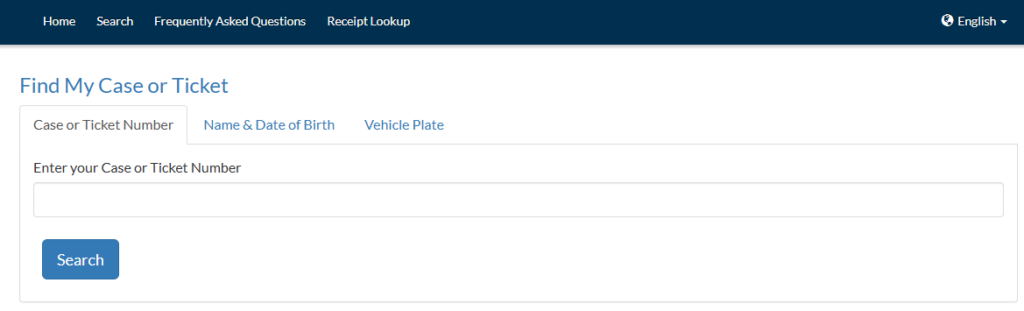
A traffic ticket can be found online by entering the citation number into the official court search system. For a kern county traffic citation lookup, the citation number connects the ticket to the court record, fine amount, court date, and payment options. Drivers in Kern County can review most traffic citations online without visiting the courthouse. The online system supports ticket lookup, citation search, traffic case status tracking, and court record search in one place.
Official Traffic Citation Search Website URL: https://www.kern.courts.ca.gov
Where to Find the Citation Number
The citation number appears on the paper ticket issued by the officer. Traffic citation lookup is available through the Traffic Division section of this site. Users should always verify they are on the official government website before entering personal details. The citation number may contain numbers only or a mix of letters and numbers. It must be entered exactly as shown.
It is usually located:
- At the top right corner of the citation
- Near the violation code section
- On mailed courtesy notices from the court
- On reminder letters about payment due
Steps to Search a Traffic Citation Online
Below is a complete user guide explaining how to use the Traffic Citation Search Tool.
Visit the Official Website
Open a browser and go to: https://www.kern.courts.ca.gov
On the homepage:
- Click “Traffic” in the main menu
- Select “Pay Traffic Ticket” or “Traffic Case Search”
Choose Search Method
The system may allow different search options:
- Citation Number Search (fastest method)
- Name and Date of Birth search
- Case Number search
Enter Required Information
Double-check for typing errors before submitting. Type the citation number exactly as printed.
You may need to enter:
- Date of birth
- Driver’s license number (in some cases)
- CAPTCHA verification
Review Search Results
After submitting, the system displays the traffic case record.
The page may show:
- Case number
- Violation description
- Bail or fine amount
- Court appearance date
- Traffic school eligibility
- Payment deadline
- Traffic case status
Common status terms include:
- Pending
- Payment Due
- Court Scheduled
- Traffic School Assigned
- Case Closed
Make Payment or Take Action
A confirmation page appears after payment. Users should save or print the receipt. After locating the ticket, users may:
- Pay the fine online
- Request traffic school
- Request an extension
- Schedule a court appearance
Online payment usually requires:
- Debit or credit card
- Case confirmation details
- Billing information
What If the Citation Is Not Found?
If the citation search does not return results, possible reasons include:
- Ticket not yet entered into the system
- Incorrect citation number
- Case filed under a different court location
- System update delay
Most citations appear online within 5 to 10 business days after issuance.
Users can:
- Recheck the number format
- Use name-based case number search
- Contact the Traffic Division clerk
- Visit the courthouse in person
How to Pay a Kern County Traffic Ticket Online
To pay kern county traffic ticket online, drivers must use the official fine payment portal and submit the court fine before the traffic fine due date. The online citation payment system allows secure online ticket payment and generates a payment confirmation receipt immediately after checkout.
Traffic fines in Kern County can be paid through the official Superior Court website: https://www.kern.courts.ca.gov
Information Needed Before Payment
Having these ready makes online ticket payment faster and smoother. Gather these details before opening the fine payment portal:
| Required Detail | Where to Find It |
|---|---|
| Citation Number | Printed traffic ticket |
| Date of Birth | Driver’s license |
| License Plate Number | Vehicle registration |
| Debit/Credit Card | For payment |
Official Fine Payment Portal
Confirm that the website shows the official court domain before entering personal information. Visit the official website: https://www.kern.courts.ca.gov
Then:
- Click Traffic
- Select Pay Traffic Ticket
- Open the secure citation payment system
Online Payment Process
Follow this structured process:
Enter Case Details
Input:
- Citation number
- Date of birth
- License plate number (if requested)
The system will display:
- Total court fine
- Fee breakdown
- Traffic fine due date
- Case status
Review the Court Fine
If the ticket shows delinquent status, extra fees may already be added. Carefully check:
- Base fine
- Court assessments
- Administrative fees
- Any late penalties
Choose Payment Method
Some portals allow electronic checks. A service fee may apply. Enter billing information accurately and confirm the total amount. Accepted payment methods typically include:
- Visa
- MasterCard
- Discover
- Debit cards
Submit Payment
Click submit to process the court fine. Save or print the receipt for your records.
After successful payment:
- A confirmation page appears
- A payment confirmation receipt number is generated
- Email confirmation may be sent
Traffic Fine Due Date
Each traffic ticket comes with a specific fine due date, which is typically within 21 days of receiving the citation or before the scheduled court appearance. Meeting this deadline is important because timely payment prevents additional penalties and ensures that the case remains in good standing. Drivers should carefully note the due date on their ticket and plan to pay before it passes. Early payment also avoids complications that can arise if the ticket becomes delinquent.
Late Payment Penalties
Failing to pay a traffic fine on time can result in several consequences. The original court fine may increase, additional penalty fees could be assessed, and the ticket may be marked as delinquent in official records. This status can trigger a DMV registration hold and may even affect a driver’s license. In extreme cases, unpaid tickets can escalate to collections action. Prompt payment is the best way to prevent these escalating financial and legal consequences.
What to Expect After Payment?
Once a traffic fine is paid online, the case status in the system is updated, reflecting the completed payment. The outstanding balance is adjusted, and the record moves toward closure. It is recommended to check the court portal within a few days after payment to confirm that the system has registered the update. Ensuring the record reflects payment provides peace of mind and helps avoid any future misunderstandings or penalties related to the ticket.
DMV Record Points & Traffic Violations in Kern County
DMV record points are added to a driver’s record after certain traffic violations in California. These points are tracked under the California Department of Motor Vehicles and can affect driving privileges, insurance rates, and negligent operator status. In Kern County, traffic convictions reported by the court are forwarded to the DMV. Once recorded, the points become part of the driver’s official driving record.
How the California DMV Point System Works
The California DMV point system assigns points based on the severity of the violation. The DMV may send a warning letter before taking action. If point accumulation continues, the driver may face suspension or probation. Administrative hearings may be offered before suspension. Points remain on a driving record for a set period, usually 3 to 10 years depending on the offense. The DMV monitors point totals over specific timeframes.
- 1 point – Minor moving violations
- 2 points – Major offenses
A driver may be labeled a negligent operator if they accumulate:
- 4 points in 12 months
- 6 points in 24 months
- 8 points in 36 months
Common Violations and Their Point Values
More serious violations carry higher risk and longer reporting periods. A DUI can stay on a driving record for 10 years. Commercial drivers may face stricter standards. Each conviction reported by traffic court adds points automatically. Drivers cannot remove points without qualifying programs or legal remedies. Below are examples of common traffic violations and associated DMV record points:
- Speeding (minor) – 1 point
- Running a red light – 1 point
- Unsafe lane change – 1 point
- At-fault accident – 1 point
- Reckless driving – 2 points
- DUI conviction – 2 points
Impact on Insurance Rates
DMV record points often lead to an insurance premium increase. Insurance companies review driving records during policy renewals. Even one point may raise rates for several years. Two or more points can significantly increase premiums. Insurers consider drivers with multiple points as higher risk. Some drivers may lose preferred status discounts. Maintaining a clean driving record helps control long-term insurance costs.
Point Accumulation Consequences
A suspension can affect employment, especially for commercial drivers. Court fines and administrative penalties are separate issues. Paying a ticket does not prevent point assessment. Drivers should monitor their driving record regularly. Early action may reduce long-term consequences. Accumulating too many DMV record points can result in:
- Negligent operator classification
- License suspension
- Probation period
- Mandatory DMV hearing
Traffic School and Point Reduction
Completion does not remove the conviction, but it prevents the point from affecting insurance. Drivers must complete the course by the deadline set by the court. Taking timely action can prevent DMV record points from causing long-term damage to driving privileges. Eligible drivers may attend a defensive driving course, commonly known as traffic school.
Benefits include:
- Point reduction visibility (point masked from public record)
- Protection from insurance premium increase
- Maintains cleaner driving record
Traffic school eligibility usually requires:
- Valid driver’s license
- Minor moving violation
- No recent traffic school completion
How to Request a Traffic Hearing in Kern County
A traffic hearing request allows a driver to contest a citation instead of paying the fine. In Kern County, drivers can plead not guilty and request a court date to challenge the violation before a judicial officer. Traffic cases in Kern County are handled by the Superior Court. Drivers must act before the appearance date listed on the citation. Filing a timely traffic hearing request protects legal rights and provides an opportunity to challenge the citation properly.
Contesting a Traffic Ticket
To begin the process, the driver must notify the court before the deadline. Ignoring the citation can lead to penalties and license consequences. Contesting a ticket does not remove the obligation to respond. The court requires formal action before the appearance date. Drivers should review citation details carefully before filing a traffic hearing request. Drivers who disagree with the citation may choose to:
- Plead not guilty
- Request a traffic court trial
- Submit a trial by declaration
Arraignment Process
An arraignment is the first formal court step. If the driver pleads not guilty, the court sets a trial date. Some arraignments may be handled without full in-person hearings depending on court procedures. The judicial officer explains rights and next steps.
During arraignment:
- The charge is read
- The driver enters a plea
- The court schedules further proceedings
Plea options include:
- Guilty
- No contest
- Not guilty
Trial by Written Declaration
A trial by declaration allows the driver to contest the ticket in writing. The citing officer submits a written statement as well. A judicial officer, or in cases involving minors, a juvenile court representative, reviews both sides and issues a decision. If found not guilty, the bail deposit is refunded. If found guilty, the fine stands. Drivers may request a new in-person trial if dissatisfied with the written decision.
Steps include:
- Submitting a written statement
- Providing supporting evidence
- Depositing the bail amount
In-Person Hearing Request
Drivers may request a traditional traffic court trial. The judicial officer then issues a ruling. Drivers must attend on the assigned appearance date unless excused by the court. Failure to appear can result in extra penalties and license suspension.
This involves:
- Scheduling a court date request
- Appearing before a judicial officer
- Presenting testimony and evidence
At the hearing:
- The officer may testify
- The driver may question the officer
- The court reviews all facts
Court Appearance Requirements
Arrive early and dress appropriately. Address the judicial officer respectfully. After the hearing, the court will issue a decision. If found not guilty, no fine or DMV record points are added. If found guilty, payment instructions and deadlines apply. Before attending court, drivers should:
- Bring the citation
- Bring identification
- Bring any evidence (photos, diagrams, witness statements)
Traffic Ticket Fines & Penalties in Kern County
Traffic violation kern county fines often cost more than drivers expect. The amount printed on the citation is only the starting point. Courts add mandatory state and local assessments that increase the total owed. Drivers should review the full bail amount carefully before making payment decisions. Traffic fines in Kern County follow statewide rules under California law. The Superior Court applies fixed formulas to calculate penalties. These formulas include court assessments and state surcharges. Knowing how these amounts are structured helps drivers plan financially and avoid added penalties.
Base Fine vs Total Bail Amount
The base fine is the original dollar amount assigned to a specific violation. This number reflects the seriousness of the offense under California traffic codes. It often appears smaller than the final total. Many drivers are surprised when the total increases significantly. The total bail amount includes several required additions. These additions apply automatically under state law. Drivers must pay the full bail amount unless they request a hearing. Courts do not waive mandatory state assessments without legal grounds.
The total bail amount usually includes:
- Base fine
- State penalty assessments
- County surcharges
- Court assessments
- Administrative fees
State Penalty Assessments and Court Fees
California applies layered financial penalties to traffic citations. These assessments fund court operations and public programs. Each assessment is calculated as a percentage of the base fine. The combined effect increases the total substantially. These fees apply across the state under traffic penalties California rules. Drivers cannot opt out of these charges. The court must include them in the total bail calculation.
Court assessments support:
- State court construction funds
- Emergency medical services
- Criminal justice programs
- Local government operations
Late Fees and Failure to Pay
Missing the payment deadline results in added financial pressure. Courts impose civil assessment charges on overdue cases. These penalties increase the balance quickly. Delays often make resolution harder. A delinquent case continues to grow until resolved. Paying before the due date prevents unnecessary costs.
Consequences of failure to pay may include:
- Additional late fees
- Civil assessment up to $300
- Increased total balance
- Referral to collections
Failure to Appear Penalties
A missed court date creates separate legal trouble. The court treats failure to appear as a serious issue. This violation goes beyond the original traffic ticket. Immediate action is required to correct it. A bench warrant may require court clearance before driving privileges return. Ignoring a court date often leads to higher financial and legal consequences. Penalties may include:
- Civil assessment charge
- Bench warrant in certain cases
- License hold notification
License Suspension Risk
Unpaid fines or missed hearings can trigger DMV action. Courts notify the California Department of Motor Vehicles when cases remain unresolved. The DMV may place a hold on driving privileges. This action affects daily transportation and employment. Resolving the ticket early reduces suspension risk. Drivers should confirm case status after payment. Possible outcomes include:
- DMV license hold
- Suspension notice
- Registration renewal block
Traffic School Eligibility & Benefits
Traffic school kern county programs give eligible drivers a way to protect their driving record. Courts approve traffic school for certain minor violations. This option helps prevent insurance rate increases. Drivers must request approval before completing the course. Traffic school is available only under specific conditions. Serious violations do not qualify. The court reviews eligibility at the time of citation resolution. Drivers should confirm approval before enrolling.
When You Qualify
Eligibility depends on the type of violation and driving history. Most minor moving violations qualify. Drivers must meet state and court standards. Approval is not automatic. Commercial drivers face stricter rules. The court makes the final eligibility decision.
Basic requirements include:
- Valid non-commercial license
- Minor moving violation
- No recent traffic school within 18 months
- Court approval
How Traffic School Removes DMV Points
Traffic school applies point masking, not point deletion. The conviction remains on the driving record. Insurance companies cannot view the point. This helps protect against premium increases. The California Department of Motor Vehicles records the conviction internally. Public insurance checks do not display the masked point. This benefit makes traffic school a practical option for many drivers.
Payment and Enrollment Process
Drivers must complete several steps before starting the course. Payment of the full fine is required first. Courts charge a separate administrative fee for traffic school. Approval must appear in the case record. Course providers report completion directly to the court in many cases.
After approval:
- Select a licensed defensive driving provider
- Choose classroom or online traffic school
- Begin coursework within the deadline
Completion Deadlines
The court assigns a strict completion deadline. Most deadlines range between 60 and 90 days. Missing this deadline cancels the traffic school benefit. The DMV point may then appear on the public record. Timely completion protects the driving record from insurance impact.
Drivers must:
- Finish all lessons
- Pass required tests
- Confirm court receives proof
What Happens If You Ignore a Traffic Ticket?
Failure to appear kern county cases can escalate quickly. Ignoring a citation does not stop the legal process. Courts treat non-response as a separate violation. Penalties increase over time. Unresolved tickets may affect both finances and driving privileges. The court adds assessments and reports cases to the DMV. Early action prevents long-term complications.
Additional Fines and Civil Assessments
When a driver ignores the citation, the court may add civil assessments. These fees increase the total owed significantly. The case becomes a delinquent citation. Financial pressure grows each month. The longer the delay, the more expensive the resolution becomes. Ignoring notices can also affect credit reporting in some cases. Acting early helps prevent additional stress and keeps your driving record in better standing.
Consequences include:
- Added civil assessment fees
- Higher total fine
- FTA penalty up to $300
License Suspension and DMV Notice
Courts notify the California Department of Motor Vehicles about unresolved cases. The DMV may issue a suspension notice. A license hold can follow shortly after. Registration renewal may be blocked. Driving on a suspended license creates further legal trouble. Restoring driving privileges requires clearing the court case first. Addressing the citation promptly can help prevent additional fees and avoid prolonged restrictions on your driving privileges.
Court Warrant and Collections
Some failure to appear cases may result in a court warrant. This step increases legal risk. The court may refer unpaid balances to collections agencies. Collection fees may be added to the total owed. Responding quickly reduces these risks. Ignoring collection notices can create long-term financial consequences. Resolving the matter early prevents escalation and protects your personal and financial information.
Possible outcomes include:
- Wage garnishment risk
- Credit impact
- Ongoing collection efforts
Why Acting Quickly Matters
A delinquent citation rarely resolves on its own. Financial penalties increase steadily. DMV action can limit daily activities. Court records reflect unresolved violations. Addressing the ticket early protects both finances and driving privileges.
Taking action before deadlines helps prevent:
- FTA penalty charges
- License suspension
- Court warrant issues
Kern County Traffic Court Locations
Finding the right kern county traffic court locations is key when handling a citation, asking for a hearing, or paying fines in person. The Kern County Superior Court operates multiple branches across the county, and knowing addresses, clerk hours, traffic division availability, parking, and security screening details helps visitors prepare for their visit.
Traffic Division – Bakersfield
Kern County Superior Court – Traffic Division Web Address: 3131 Arrow St, Bakersfield, CA 93308 Phone: +16616107000
This is the primary traffic court location in Bakersfield. It handles most traffic citations issued in the metropolitan area and offers a citation payment window and clerk assistance. The Bakersfield location generally has longer hours than other branches, and financial services may be available on site for paying citations directly. Parking is available on-site in the court lot, though spots can fill up early in the morning. Expect security screening upon entry, including metal detectors and bag checks for everyone entering the building.
Address: 3131 Arrow St, Bakersfield, CA 93308
Clerk Office Hours:
- Monday–Thursday: 7:30 AM–4:00 PM
- Friday: 7:30 AM–12:00 PM
Delano Courthouse – Delano
This courthouse handles traffic and civil matters locally. Free parking is usually available nearby, but spaces closest to the entrance may be limited. Expect standard courthouse security screening at the entrance. The Delano branch serves residents in northern Kern County.
Address: 1122 Jefferson St, Delano, CA 93215
Clerk Hours:
- Monday–Thursday: 8:00 AM–4:00 PM
- Friday: 8:00 AM–12:00 PM
Ridgecrest Courthouse – Ridgecrest
Ridgecrest branch takes care of traffic and other court needs for the eastern portion of Kern County. Parking is typically free around the courthouse. Security screening is required for all visitors. Ridgecrest offers traffic division services and can guide visitors on their citation handling, court dates, and payment options locally.
Address: 132 E Coso Ave, Ridgecrest, CA 93555
Clerk Hours:
- Monday–Thursday: 8:00 AM–4:00 PM
- Friday: 8:00 AM–12:00 PM
Kern County Superior Court – Shafter
Kern County Superior Court Web Address: 325 Central Valley Hwy, Shafter, CA 93263 Phone: +16617467500
The Shafter location serves the central part of the county. Shafter generally provides full clerk services, including traffic division assistance. Street and lot parking are available nearby, and security screening is in place at all court entrances.
Address: 325 Central Valley Hwy, Shafter, CA 93263
Clerk Hours:
- Monday–Thursday: 8:00 AM–4:00 PM
- Friday: 8:00 AM–12:00 PM
South Division – Taft Branch
This smaller location serves the southwestern portion of Kern County. Taft offers local court access for residents closer to that region. Parking is generally free outside the courthouse, and all visitors must pass through security screening before entry.
Address: 311 Lincoln St, Taft, CA 93268
Clerk Hours:
- Monday–Thursday: 8:00 AM–3:00 PM
- Friday: 8:00 AM–12:00 PM
Frequently Asked Questions
Many drivers have quick questions about tickets, payments, DMV points, and court hearings. This FAQ section provides clear, direct answers written for fast results and featured snippet visibility. Each answer gives practical steps that can be followed immediately. These responses apply to traffic cases handled in Kern County.
How do I pay a Kern County traffic ticket online?
To pay a Kern County traffic ticket online, visit the official Superior Court website at https://www.kern.courts.ca.gov and select the Traffic section. Choose the payment option to open the fine payment portal. Enter your citation number and date of birth exactly as shown on your ticket. The system will display your total court fine, including assessments. Review the amount carefully before submitting payment with a debit or credit card. After checkout, the portal generates a payment confirmation receipt. Save or print this receipt for proof of payment. Case records usually update within a few business days after processing.
How do I check my citation number?
You can check your citation number by reviewing the original traffic ticket issued by the officer. The number is usually printed near the top corner of the document. If you received a courtesy notice by mail, the citation number will appear there as well. Drivers who misplaced the ticket can search the court’s online system using their full name and date of birth. Another option is contacting the traffic division clerk for assistance. Provide identification details to verify the record. Always confirm the citation number carefully before using it for payment or court requests.
How many DMV points is a speeding ticket?
Most standard speeding tickets in California carry one DMV record point. Under the system used by the California Department of Motor Vehicles, minor moving violations add one point to your driving record. More serious speeding offenses, such as driving over 100 miles per hour, can result in two points. Points typically remain on the driving record for several years. Insurance companies review driving records during renewals and may increase premiums after a conviction. Eligible drivers may complete traffic school to mask the point from insurance view, though the conviction still remains on record internally.
Can I request a traffic hearing online?
Yes, drivers may request a traffic hearing online through the Kern County Superior Court website. Visit the Traffic section before your scheduled appearance date. You can choose to plead not guilty and request a court date or select trial by written declaration. Some cases require a bail deposit before a hearing is scheduled. After submitting the request, the court will assign a new appearance date or provide instructions for written submission. Always complete the traffic hearing request before the deadline printed on your citation. Missing the deadline can lead to added penalties and possible license consequences.
What if I lost my traffic ticket?
If you lost your traffic ticket, you can still resolve the citation. Start by visiting the court’s official website and search using your full name and date of birth. The system may display your case number and violation details. If online search does not work, contact the traffic clerk by phone or visit the courthouse in person. Provide identification information so staff can locate your record. Do not ignore the ticket simply because it is missing. Court deadlines still apply. Unresolved cases can result in added fines, civil assessments, and license hold notifications.