Kern County public records are official documents created, filed, and maintained by government offices in Kern County. These records include court filings, property deeds, vital records, business registrations, and meeting minutes that document public activity. They serve as verified sources of information for residents, businesses, journalists, and researchers. Public records search tools allow people to review county records database entries through online systems or in-person requests. Public archives protect long-term documentation of legal and administrative actions. By maintaining organized official documents, the county supports government transparency and preserves the public’s right to review non-confidential information under state law.
Kern County public records matter since they protect legal rights and confirm important facts. Property buyers check deeds before closing transactions, attorneys review court dockets, and reporters analyze government spending reports. These records promote open government under the California Public Records Act, which grants the public the right to request non-confidential documents. Most records remain available to anyone who submits a request, though sealed or sensitive files stay restricted. Through structured public records search systems and open records requests, the county makes public information available in a lawful and organized way that strengthens trust and accountability.
What Are Kern County Government Records?
Kern County government records are official documents created, received, and stored by public agencies in Kern County Court. These records document government actions, legal matters, property transactions, and vital events. They create a reliable history of county operations and preserve verified information for public review. Kern county government records support transparency, confirm legal rights, and maintain structured documentation across agencies. Residents, businesses, researchers, and media outlets rely on these records for accurate public information.
Kern county government records include any documented information produced or maintained by a county office while performing official responsibilities. These records may exist as paper documents, scanned files, electronic databases, photographs, or audio recordings. Each document serves as proof of a government action, filing, or decision. Administrative records, agency records, and official filings all fall within this category. The county preserves these materials as part of its public archives system.
Common examples of government records include:
- Administrative records such as meeting minutes and departmental reports
- Court filings from civil, criminal, and probate cases
- Property deeds showing ownership history
- Vital statistics like birth, death, and marriage records
- Official filings for business registrations and permits
Departments That Maintain Records
Several departments manage kern county government records based on their assigned duties. Each office handles specific types of agency records and maintains its own filing system. Departments organize documents through both physical archives and digital public database platforms. This structured system allows efficient record retrieval and long-term preservation. Accurate storage methods help maintain data integrity.
Key departments include:
- County Clerk’s Office – Maintains marriage licenses, fictitious business name filings, and vital statistics.
- Recorder’s Office – Stores property deeds, liens, and land transaction documents.
- Superior Court of California, County of Kern – Preserves court filings, case dockets, and judgments.
- Sheriff’s Office – Maintains law enforcement reports and arrest records.
- Planning and Building Department – Keeps permits, zoning files, and inspection reports.
Digital vs. Physical Records
Kern county government records exist in both physical and digital formats. Older documents often remain stored in paper archives within county facilities. These records may require written requests or in-person visits for certified copies. Physical files remain important for historical preservation and legal validation. Many archived materials date back decades. Modern records frequently appear in searchable online systems. Digital public database tools allow users to search court filings, property deeds, and administrative records using names, case numbers, or parcel numbers. Electronic systems improve efficiency and shorten response times. Still, certified or sealed documents may require identity verification before release.
Public vs. Restricted Records
Most kern county government records are open for public review under the California Public Records Act. Public records promote accountability and allow residents to verify government actions. Many administrative records, property deeds, and civil court filings remain publicly available. Departments review requests and provide copies when records qualify for release. Public transparency remains a core function of county operations.
How to Search Kern County Public Court Records
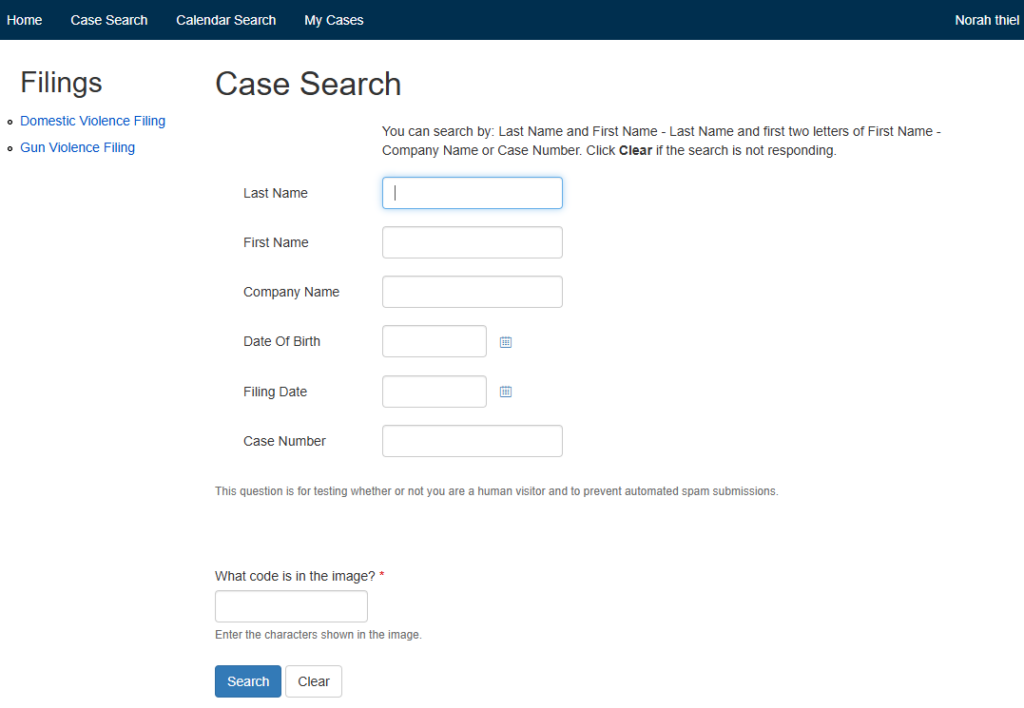
This page allows users to perform a kern county public records search for court cases using name details, company name, filing date, or case number.
Official Portal: https://portal.kern.courts.ca.gov/?q=node/393
Enter Last Name
This field is required if searching by individual name. In the Last Name field:
- Enter the full legal last name of the person.
- Spelling must match court records.
- Do not use nicknames.
Example: Smith
Enter First Name
Using both first and last name improves search accuracy. In the First Name field:
- Enter the full first name.
- You may enter only the first two letters if unsure.
- Leaving it blank may return too many results.
Example: John
Company Name
This works for civil and business-related court filings. If searching for a business case:
- Leave personal name fields blank.
- Enter the registered company name.
- Avoid abbreviations unless officially used.
Example:
ABC Construction LLC
Date of Birth
This reduces duplicate results in the database lookup. Use this field when:
- The name is common.
- Multiple results appear.
- You need to identify the correct person.
Enter full date using the calendar icon.
Format example: MM/DD/YYYY
Filing Date
This helps narrow large result lists in the document retrieval system. Use Filing Date if:
- You know when the case was filed.
- You want to limit results to a specific year.
Case Number
Case number search gives the fastest and most precise result. If you already know the case number:
- Enter it directly in the Case Number field.
- Leave other fields blank.
This is the most accurate way to complete a case search.
Example format: BCV-23-123456
After Entering Information
- Click the Search button.
- Wait for results to load.
- Review the case list displayed.
- Click the case number to open case details.
What Records You Can Search
Restricted cases such as juvenile matters will not appear. This portal supports public document access Kern County for:
- Civil cases
- Criminal cases
- Traffic cases
- Family law cases
- Probate matters
Types of Public Records Available in Kern County
Public document access Kern County includes a wide range of official records created and preserved by government agencies in Kern County. These records document legal proceedings, property ownership, vital events, licensing activity, and government operations. Each record category serves a different public purpose and supports transparency through structured filing systems. Residents, attorneys, researchers, and businesses rely on these public filings for verified information. Organized recordkeeping allows long-term preservation of legal documents and official certificates.
Court Records
Court records are judicial records that document legal proceedings handled by the Superior Court of California, County of Kern. These records show how disputes are resolved and how criminal charges move through the justice system. Court files include case summaries, party names, hearing dates, rulings, and judgments. Many records are searchable through the court’s online case search portal. Certified copies may require identity verification and processing fees.
Public court records include several categories:
- Civil cases – contract disputes, personal injury claims, landlord-tenant matters
- Criminal cases – felony and misdemeanor prosecutions
- Traffic cases – citations and traffic violations
Property & Land Records
Property and land records confirm ownership and track real estate transactions across Kern County. These records are maintained by the county recorder office and form part of the official public database. They document property transfers, liens, easements, and parcel maps. Buyers, lenders, and title companies review these legal documents before completing transactions. Ownership history provides proof of title and protects property rights.
Common property records include:
- Deeds (grant deeds, quitclaim deeds)
- Ownership history records
- Parcel records and assessor parcel numbers
- Liens and releases
Vital Records
Vital records document major life events, including birth records, marriage and divorce records, and serve as official certificates for legal and administrative purposes. These records are maintained by the county clerk records division and local health authorities. They confirm identity, citizenship status, and family relationships. Vital records often require a formal application and proof of eligibility for certified copies. Public index searches may provide limited information.
Vital records include:
- Birth certificates
- Death certificates
- Marriage records
Business & Licensing Records
Business and licensing records track commercial activity within Kern County. These public filings document legal registration and regulatory compliance. Entrepreneurs file fictitious business names and licensing applications through the county clerk. These records confirm operational status and ownership details. Financial institutions and partners review business filings before entering agreements.
Examples include:
- Fictitious business name statements
- Business registration filings
- Professional license records
- Permit applications
Arrest & Criminal Records
Arrest and criminal records document law enforcement actions and prosecution outcomes. The Kern County Sheriff’s Office maintains booking and arrest reports, while court case outcomes appear in judicial records. These documents show charges filed, custody status, and court dispositions. Some records remain publicly viewable, subject to legal limits. Sealed or expunged records may not appear in public searches.
Criminal records often include:
- Arrest date and charges
- Booking information
- Case disposition
- Sentencing details
Meeting Minutes & Government Reports
Meeting minutes and government reports document official county decisions and financial oversight. These records promote transparency by showing how policies are approved and budgets are allocated. Departments publish agendas, resolutions, and audit findings for public review. Residents and journalists review these documents to monitor local governance. Many reports appear in digital archives on official county websites.
Common examples include:
- Board of Supervisors meeting minutes
- Budget reports and financial statements
- Department activity summaries
- Policy resolutions
How to Submit an Open Records Request in Kern County
An open records request allows the public to formally ask a government agency for copies of public documents. In Kern County, this process supports transparency by giving residents and researchers a structured way to obtain records that may not appear in online databases. The request must clearly describe the documents sought and identify the department holding them. Agencies review each submission under state transparency law and respond within required timelines. This process strengthens public accountability and organized disclosure practices.
What Is an Open Records Request?
An open records request is a written disclosure request asking a public agency to provide non-confidential records. It differs from a simple online search because it triggers a formal review under transparency law. Agencies must evaluate the request and determine whether the records are releasable or fall under legal exemptions. This process ensures lawful handling of sensitive data and public documents.
Examples of records requested through this process include:
- Internal administrative reports
- Government contracts and vendor agreements
- Budget summaries and financial statements
- Policy communications
- Archived records not listed online
When Should You Submit One?
Submit an open records request when the needed document does not appear in the county’s digital archives or public database. This method works best for obtaining internal reports, correspondence, and older records not indexed online. It is useful for journalists, attorneys, and residents seeking detailed documentation. Requests should clearly define the time frame and subject matter. Specific details reduce delays and improve response accuracy.
You may consider submitting a request when:
- Online case search tools show limited details
- You require certified copies of administrative records
- You seek historical public filings
- You need written confirmation of agency actions
How to File an Open Records Request in Kern County
Filing a formal records request requires a written submission directed to the proper department. The request must describe the records with enough detail for staff to locate them. Departments may accept email, mail, in-person delivery, or online submission forms. Always keep a copy of your request for reference. Organized documentation protects both the requestor and the agency.
Methods to file:
- Email: Send a written request including your name, contact information, record description, and date range.
- Mail: Submit a signed letter to the department’s mailing address.
- In Person: Deliver a written request directly to the office counter.
- Online Form: Some departments provide web-based submission portals. Include:
- Full name
- Contact details
- Clear description of records
- Preferred format (email or paper copy)
Response Timelines
Under the California Public Records Act, agencies typically respond within 10 calendar days. The agency may extend this period in certain situations, such as large requests or legal review needs. The response must confirm receipt and state whether records will be disclosed, partially withheld, or denied. Clear communication supports transparency compliance and public trust.
Appeal Process
If an agency denies a disclosure request, it must provide written justification citing legal exemptions. Requestors may seek clarification or submit a written appeal to department leadership. If concerns remain unresolved, judicial review through court action may follow. Agencies must identify specific legal exemptions when withholding records. This structured appeal path supports fairness and lawful record transparency.
Public Information Act & Record Transparency Laws
The public information act governing Kern County operations is known as the California Public Records Act. This law establishes rules for record transparency and public accountability across state and local agencies. It defines how agencies must respond to requests and which documents qualify for disclosure. The law balances public oversight with privacy protections. Clear statutory language supports structured compliance and consistent disclosure practices.
Citizens’ Rights Under Transparency Law
Citizens and non-residents have the right to inspect public records during business hours. They may request copies of official documents and receive written responses within statutory deadlines. Agencies must confirm whether responsive records exist. If records are withheld, the agency must cite legal exemptions. These rights support public accountability and informed civic participation.
Government Obligations
Government agencies must maintain organized record systems and respond within required timelines. They must separate exempt material from releasable content when possible. Written responses must clearly explain disclosure decisions. Agencies cannot delay release without lawful reason. Transparency compliance strengthens trust between the public and government offices.
Legal Exemptions and Privacy Protections
Privacy protections prevent misuse of confidential data. Agencies must balance openness with lawful confidentiality standards. Record transparency laws support public review while safeguarding personal information and protected records. Legal exemptions protect sensitive information from disclosure. Common exemptions include:
- Active law enforcement investigations
- Personnel files
- Medical and personal data
- Juvenile records
- Attorney-client privileged communications
Fees for Copies & Certified Records
Public document copies Kern County may require payment depending on the type of record requested. Inspection of records at a public service window is usually free. Fees apply when requesting printed copies or certified documents bearing an official seal certification. Costs vary by department and document type. Departments publish document reproduction fees based on page count or certification type. Requestors should confirm current rates before submitting payment. Processing charges apply only to duplication or certification services, not to simple inspection.
Kern County Public Document Copy & Certification Fees
| Record / Service | Fee | Notes |
|---|---|---|
| Certified Birth Certificate | $34 per copy | Fee set by California state law |
| Certified Death Certificate | $26 per copy | Fee set by California state law |
| Certified Marriage Certificate | $19 per copy | Issued by County Clerk |
| Court Public Copy | $0.50 per page | Standard photocopy fee |
| Certified Court Document | $40 certification fee + per page cost | Applies to judgments, orders |
| Property Record Copy | $6 first page + $3 each additional page | Official recorded documents |
| Search / Retrieval Fee | May apply | Charged for extended staff research |
Copy Fees
Standard copy fees typically apply per page. Fees may increase for oversized maps, recorded property documents, or archived materials requiring special retrieval. Public document copies Kern County are priced to recover duplication costs while maintaining record transparency. Bulk requests may require additional processing time.
Common copy-related charges include:
- Per-page photocopy fees
- Large-format reproduction fees
- Digital file duplication fees
- Archived file retrieval charges
Certification Fees
Certified copies include an official seal certification verifying authenticity. Certification is often required for legal filings, passport applications, and financial transactions. Certification fees are charged per document rather than per page. These official copies are considered legally valid proof of record.
Documents commonly requiring certification include:
- Birth certificates
- Death certificates
- Marriage records
- Court judgments
- Property deeds
Search Fees & Payment Methods
Basic searches at the records counter are often free. Extended staff research or archived retrieval may involve search fees. Departments will inform requestors if processing charges apply before completing the request. Personal checks may be restricted for certain record types. Public document copies Kern County remain available through structured fee schedules designed to balance administrative cost recovery with public access rights.
Accepted payment methods typically include:
- Cash
- Debit cards
- Credit cards
- Money orders
- Cashier’s checks
In-Person Public Records Access in Kern County
Public access documents Kern County are available for in-person review at designated government offices throughout Kern County. Residents may visit official locations to inspect records, request copies, or obtain certified documents. Many older files and certified materials are easier to obtain at a physical records counter. Staff at each document services desk assist visitors with locating and requesting records. Visiting in person is helpful when online search tools do not provide complete results.
Main Government Office Location
Kern County maintains several primary offices where residents may request public records. These offices handle court files, property records, and county clerk records. Each county office address serves a specific function, so visitors should confirm the correct department before arrival. Visiting the correct records counter reduces wait times and ensures faster service.
Key Locations:
County Administration Building
1115 Truxtun Avenue, Bakersfield, CA 93301
Handles administrative records, meeting minutes, and public reports.
County Clerk & Recorder Office
1115 Truxtun Avenue, 1st Floor, Bakersfield, CA 93301
Provides access to vital records, fictitious business names, and property deeds.
Superior Court of California, County of Kern
1415 Truxtun Avenue, Bakersfield, CA 93301
Maintains civil, criminal, family, and traffic judicial records.
Office Hours
Some court counters may close earlier for document processing. Visitors should arrive at least 30 minutes before closing to submit copy requests. Holiday closures follow the official court and county calendar. Most Kern County offices operate during standard weekday business hours. Public records counters typically open Monday through Friday, excluding county holidays. Standard service hours are:
- 8:00 AM to 5:00 PM
Contact Information
Email inquiries may be available through department websites. Staff at the document services desk can guide visitors on required forms and identification. Before visiting, contacting the appropriate department can save time. Staff can confirm record availability, copy fees, and processing times. Departments provide phone assistance for general record inquiries.
General Contact Points:
- Kern County Clerk/Recorder: (661) 868-6400
- Kern County Superior Court: (661) 868-5393
- County Administration Office: (661) 868-3198
Frequently Asked Questions
Kern County public records are accessible under California transparency laws that promote accountability and public oversight. Residents, businesses, and researchers frequently request court files, property records, and vital documents. Understanding how fees, timelines, and confidentiality rules apply helps avoid delays. Below are clear, structured answers to the most common questions regarding public access, open records requests, and certified copies in Kern County.
Are Kern County public records free?
Kern County public records are generally free to inspect, but copies are not always free. Members of the public may review many documents at a records counter or through an online search portal without paying a fee. However, if you request printed copies, digital downloads, or certified documents, duplication charges usually apply. Under the California Public Records Act, agencies may charge only the direct cost of duplication, not a fee for submitting the request itself. Additional costs may apply for certification, large-format documents, or extensive staff research. Viewing records remains part of public access rights, but obtaining official copies involves structured fees.
How long does an open records request take?
An open records request in Kern County typically receives an initial response within 10 calendar days. During this period, the agency determines whether the requested records are disclosable. In certain cases, the department may extend the response time by up to 14 additional days if the request is complex or involves large volumes of documents. The response deadline refers to acknowledgment, not necessarily delivery of copies. If records require redaction, legal review, or archival retrieval, processing may take longer. Requestors are usually notified of expected completion timelines. Submitting clear, specific details such as names, case numbers, and dates helps speed up processing and reduces back-and-forth communication.
Can I search Kern County records anonymously?
Many Kern County records can be searched anonymously, particularly through public access terminals or online case lookup systems. Individuals often do not need to create an account or provide identification just to search publicly available indexes. In-person inspection of non-confidential documents at a records counter also generally does not require stating a reason for review. However, if you submit a formal written request or ask for certified copies, you must provide contact information so the agency can respond. Identification may also be required for restricted vital records. Anonymous browsing is usually permitted, but obtaining official documentation involves verification steps.
What records are confidential in Kern County?
Certain records in Kern County are legally confidential and not available for public inspection. These restrictions protect privacy rights, minors, and sensitive investigations. Examples include juvenile court cases, adoption files, sealed court records, active criminal investigations, and documents containing protected personal information such as Social Security numbers or medical details. The Superior Court of California, County of Kern follows state confidentiality laws when determining what may be disclosed. In some situations, agencies release partially redacted copies instead of full files. If a request is denied, the agency must cite the legal exemption that prevents disclosure.
How do I get certified copies of public records?
To obtain certified copies in Kern County, you must request them from the appropriate department, such as the court clerk or county recorder. Certified copies include an official seal and authorized signature verifying authenticity. You must provide accurate identifying details, including full names, case numbers, and filing dates when possible. Payment of the applicable certification fee is required before issuance. Some certified vital records may require valid identification or proof of eligibility. Requests can often be submitted in person or by mail. Processing time depends on document availability and office workload. Certified copies are commonly required for legal filings, financial transactions, and government applications.